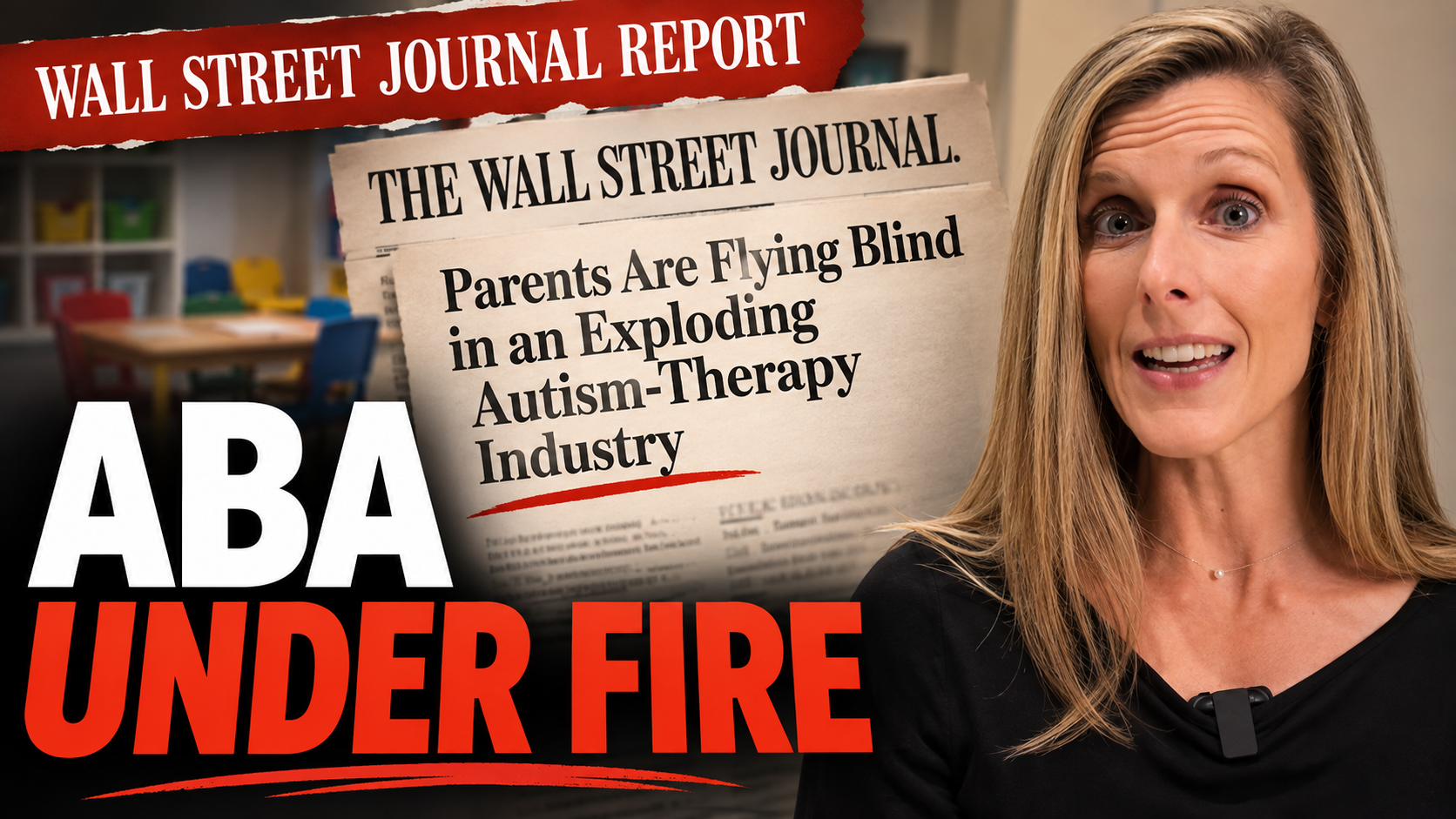
The Wall Street Journal recently released an in-depth investigation into the ABA therapy industry, bringing attention to significant concerns surrounding the quality of care, therapist qualifications, industry accountability, and the experiences of autistic children and their families.
This is an important conversation, and one that I believe we can no longer afford to avoid.
Applied Behavior Analysis (ABA) is among the most commonly recommended therapies for autistic children. But just because a therapy is widely accepted doesn’t necessarily mean it’s appropriate for every child. What happens when an industry expands rapidly without putting sufficient safeguards in place to ensure quality, accountability, and genuinely beneficial care?
In this video, I take a closer look at the Wall Street Journal’s investigation and explore several important concerns that parents and families should understand, including:
- The rapid growth of the ABA industry and ongoing concerns about insufficient oversight.
- Whether the research supporting ABA as an autism intervention is as strong as families have been led to believe.
- The education, training, credentials, and high turnover among behavior technicians.
- Why recognizing sensory processing differences and motor planning difficulties is so important when supporting autistic children.
- Why we must presume competence in every autistic child, regardless of their communication style or support needs.
- Why withholding affection, comfort, or emotional connection should never be viewed as an acceptable therapeutic practice.
- The potential harm of placing compliance above communication, self-determination, autonomy, and meaningful development.
I want to be clear: This is not an accusation that every ABA provider causes harm. There are dedicated professionals working in the field who are embracing more compassionate, individualized, and neurodiversity-affirming practices.
However, acknowledging that good providers exist does not mean we should overlook the larger concerns that need to be addressed.
Parents deserve honest information and transparency. Autistic children deserve dignity and respect. Families should have access to services that truly nurture their children’s communication, development, independence, autonomy, and overall quality of life.
Important Questions Parents Should Ask When Considering an ABA Provider
- Who will be directly working with my child, and what qualifications, training, and experience do they have?
- How do you respond when my child refuses, communicates discomfort, or says no?
- Would I ever be expected to withhold affection, reassurance, or comfort from my child?
- How familiar are you with sensory processing differences and motor planning challenges?
- Do you approach my child with the presumption that they are capable and competent?
- Am I allowed to observe therapy sessions and see how my child is being treated?
- How do you evaluate progress beyond measuring a decrease in certain behaviors?
Please remember: An autistic child should never have to appear less autistic to earn acceptance, understanding, support, or respect.
Our objective should not be to teach children unquestioning compliance or make them conform to someone else’s expectations. Instead, we should focus on helping them communicate, build relationships, develop skills, express themselves, and experience meaningful, fulfilling lives.
If you’re a parent navigating autism services, I encourage you to share this video with another family who may benefit from this information.
You are entitled to ask questions. You are entitled to understand what is happening during your child’s therapy. And you absolutely have the right to advocate for care that respects your child’s individuality, dignity, and needs.
Read the Wall Street Journal Investigation: https://www.wsj.com/health/healthcare/autism-therapy-aba-parents-34cf1cc0
Thank you for taking the time to watch. Let’s continue asking questions, sharing information, and advocating for better support for autistic children and their families.
#Autism #ABATherapy #AutismAwareness #Neurodiversity #AutismParents #AutismTherapy #PresumeCompetence #NeurodiversityAffirming #AutismAdvocacy #AppliedBehaviorAnalysis
Be sure to check out the Spellers Documentary to see how Spellers Method has impacted so many people’s lives